
If you want to live near Silicon Valley, chances are you have been considering two big options: South San Mateo County or South Bay areas. People use the terms loosely, but they are actually very different parts of the San Francisco Bay region.
Our goal here is simple. Break down what each area means, how people decide between them, and what matters most: jobs and commute patterns, weather, healthcare access, nature and lifestyle, schools, and then a realistic look at home prices across the peninsula and into the South Bay.
Whether you are a young couple, starting a family, or upgrading your home for the long run, you will leave with a clearer idea of which side fits your life better.
Table of Contents
- Quick Overview
- Peninsula vs South Bay Housing Prices
- Weather Differences
- Healthcare Access
- Commuting Options
- Outdoor Lifestyle
- Schools Compared
- What You’ll Pay on the Peninsula vs South Bay
- Hills vs Flat Living: What Your Money Actually Gets You
- Peninsula or South Bay: Which One Is the Better Fit for You?
- FAQ: Peninsula vs South Bay Living
Quick Overview
Let’s start with definitions, because even locals sometimes talk past each other.
What we mean by South San Mateo County
South San Mateo County is generally described as the area south of San Francisco and north of Palo Alto and Menlo Park. It includes the coastal communities, like half Moon Bay, Moss Beach, and Pescadero.
What we mean by the peninsula
When we say the peninsula, we usually mean the stretch of towns running from South San Francisco down toward around Redwood City. Think of it as the northern part of the peninsula compared to deeper South Bay areas.
What we mean by South Bay
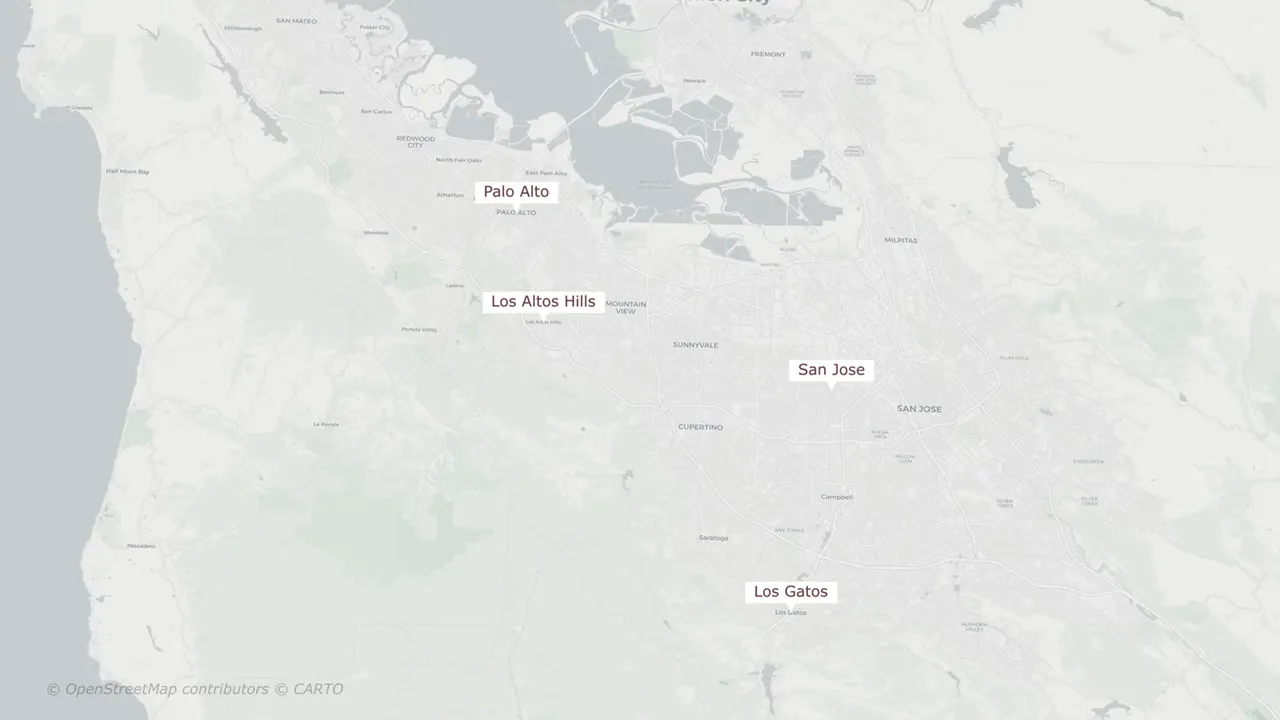
There is no single official rule for where South Bay begins, but a practical way to think about it is the southern part of the San Francisco Bay.
So when people say South Bay, they often mean areas like Los Altos Hills, Los Gatos, Palo Alto, and then further down toward San Jose. In that broader zone, you also commonly include places like Mountain View and palo Alto Valley as part of the overall South Bay vibe.
How People Actually Decide Where to Live Which Is More Affordable?
In our experience, the biggest driver is not parks, and it is rarely architecture. It is jobs.
Commute patterns and where your workday starts and ends will shape everything else, including which area feels livable on normal weekdays.
Two jobs both in Silicon Valley you usually drift toward South Bay
If both partners work in Silicon Valley, you are less likely to want to live far north. Even if you love San Francisco, the reality is that daily commuting needs to make sense. In that situation, South Bay often wins.
Both jobs in San Francisco you often lean peninsula
On the other hand, if both of you work around San Francisco and you want to live outside the city, living on the peninsula can be a cleaner fit. You still get access to the city without living inside it.
One partner city one partner valley community choice proximity matters
When one person works in San Francisco and the other works in the valley, the decision becomes partly about community. Many people choose the peninsula because it is closer to San Francisco, yet still gives reasonable access to the valley.
But it comes down to how often you actually commute.
How many days a week are you going into the office
This is where things get real. If your schedule involves more than a couple of office days per week, you may not want to live on the far end of either region.
The example we hear repeatedly is people doing long shuttle and commute patterns. One person described taking a shuttle from an Apple campus up toward Burlingame and called it miserable. Ten years ago it might not have been a big deal, but with today’s traffic, those daily friction points add up.
If you commute into the valley regularly, you probably do not want to live too far north, beyond communities like Palo Alto, Menlo Park, or Redwood City. If you work in the city, you likely do not want to live too far south.

A family decision schools parks and after school networks
A young couple might optimize for weekend proximity to San Francisco. For example, we work with young couples around age thirty who both work at the same company down in the valley. They may choose Redwood City and the north because they want closeness to San Francisco for fun, friends, and events.
But once you think about schools, parks, after school activities, and your network, location becomes more about long-term daily life. It becomes less about getting to the city and more about building routines where you live.
One key point: it is not very common to see families living as far down as Palo Alto or Palo Alto Valley and then going into San Francisco every single day. People do it occasionally, but it is usually not the preferred daily setup.
Biotech city commutes living too far south gets painful
If someone works in the biotech space on the city side, living too far south can be tough because traffic tends to back up along key corridors like 101 and 92.
It is the kind of situation where, unless you leave before 7:00 a.m ., your commute may not feel pleasant.
We once represented a family that bought in Belmont. One family member was a doctor who needed to be in San Francisco every morning by 7:00 a.m. for surgery. That arrangement was fine, but it illustrated the reality that if you shift the schedule even to something like an 8:00 a.m . city commute, living farther south (or farther north depending on the direction) can fall into the too-hard category unless you want to rely on podcasts for the whole trip.
Tech companies in the valley you usually move toward South Bay
If you work in the valley at places like Apple, Google, or Meta, you probably want to live more to the south. If you work at companies closer to the South Bay side, like Adobe or Intel, you likely want to be even more anchored on the South Bay side.
But there is nuance. If you work for other tech companies, like Roblox or Survey Monkey (or similar employers that are spread out), you may have a little more flexibility. Still, our general rule of thumb is that if you have to be in the office three to four days a week, you probably do not want a daily drive much beyond ten to twenty five minutes. It just is not fun.
Peninsula vs South Bay Housing Prices
People often assume one region is always cheaper. The truth is less dramatic.
The real estate is not automatically cheaper in one part versus the other. You will find expensive pockets in both the North Peninsula and the South Bay. There are differences by town and by neighborhood, but it is not as simple as South Bay being consistently cheaper than the peninsula.
So if you are choosing between peninsula and South Bay, pricing should be viewed as local variation, not an overall regional rule.
The East Bay comparison if you need value
There is, however, a different option that often comes up: the East Bay.
If you commute across 92 or the Dumbarton Bridge, you may get better value. You can potentially get a lower price per square foot, plus more house and more yard. But in exchange, it may be warmer and your commute might be more demanding depending on how often you go into the office.
Weather Differences
Weather is one of those topics that sounds vague until you feel it for a full year. The Bay Area is mild year round, but the peninsula and the South Bay still differ noticeably.
There is not really four seasons the way you might see in other parts of the country. Still, direction matters. In general, the more south you go, the warmer it gets.
A simple way to think about it colder peninsula Mediterranean vibe
People who live on the North Peninsula often describe it as more like a Mediterranean climate: mild and comfortable. As you go south, you generally move into warmer Mediterranean conditions.
Temperature examples from typical days
One practical example given: in July, you might be in Burlingame around 80 degrees, but in areas like Palo Alto you could be closer to 90 to 95 degrees. Meanwhile, Redwood Shores and places like San Carlos can sit closer to mid 60s to mid 70s.
That is a meaningful range. Even a difference of about ten to fifteen degrees between southernmost and northernmost parts can change what your daily life feels like.
A real ride that shows the gradient
There was a bike ride example. Starting around 8:00 a.m. in Redwood Shores at about 70 degrees, then heading down toward the South Bay like Morgan Hill, it became completely different. By the time the ride reached the South Bay area, temperatures were in the 90s. The point was not comfort planning but the fact that the geography drives the heat gradient.
Healthcare Access
If you are thinking about healthcare, the big takeaway is that access is strong across the region. Living on the peninsula or in the South Bay does not automatically mean you are better off medically.
Still, the reference points differ.
Major hospitals and where they anchor
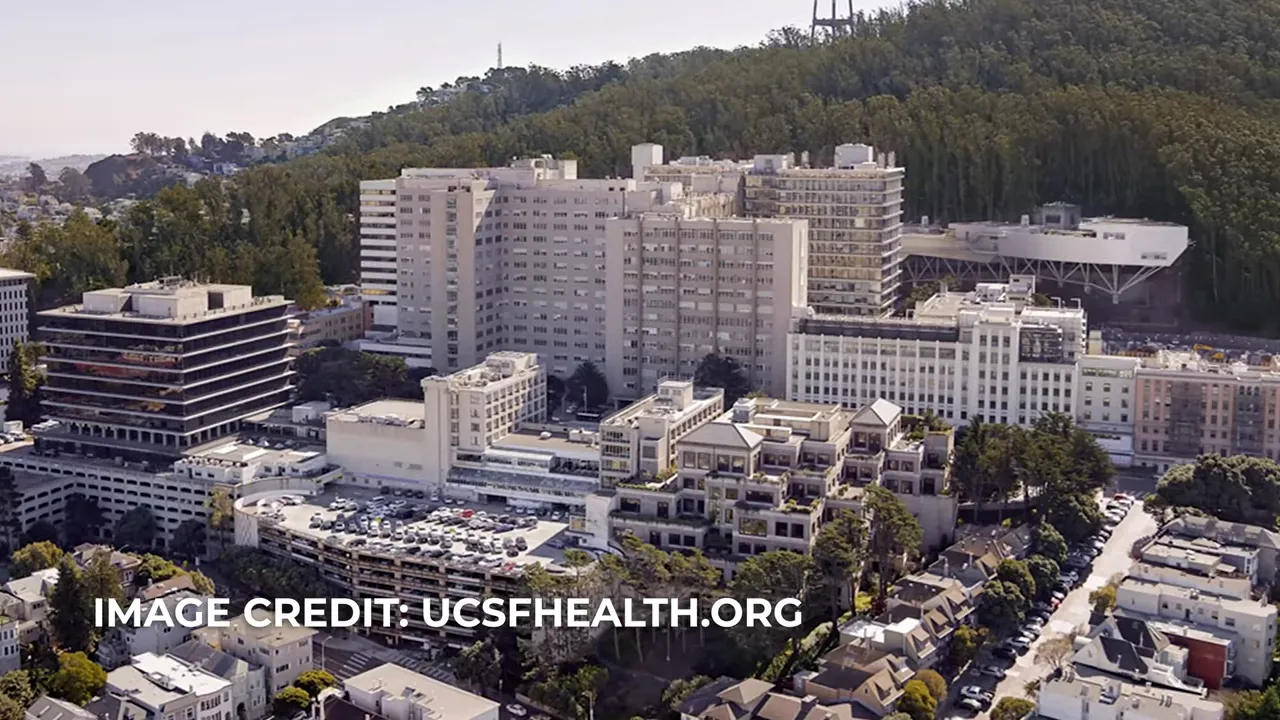
- If you live on the peninsula, you are closer to UCSF in San Francisco.
- If you live more to the south, you are closer to Stanford.
- In practice, you also have major systems throughout both regions, including Kaiser, plus Sutter Health and the Palo Alto Medical Foundation.
So wherever you live, you are generally within reach of world class healthcare.
Commuting Options
Commute choices are not only about driving times. Public transit options can change the math.
BART lives on the northern side
If you live on the North Peninsula, you can take BART into San Francisco. BART comes down to Millbrae but does not extend further south.
Caltrain stretches down the peninsula and beyond
If you live from San Francisco down toward around Mountain View, you can take Caltrain down through the peninsula and further south.
Caltrain also has been electrifying and upgrading the line with new trains, which are expected to be quieter and more comfortable.
So if you prefer transit sometimes, the northern peninsula might give you BART convenience, while Caltrain gives you a strong corridor across both sides depending on where you live and where you work.
Outdoor Lifestyle
Here is the encouraging part. This region is blessed with nature, and you usually do not need to choose “best” in order to enjoy it. Whether you are on the peninsula or in the South Bay, parks and outdoor activities are close.
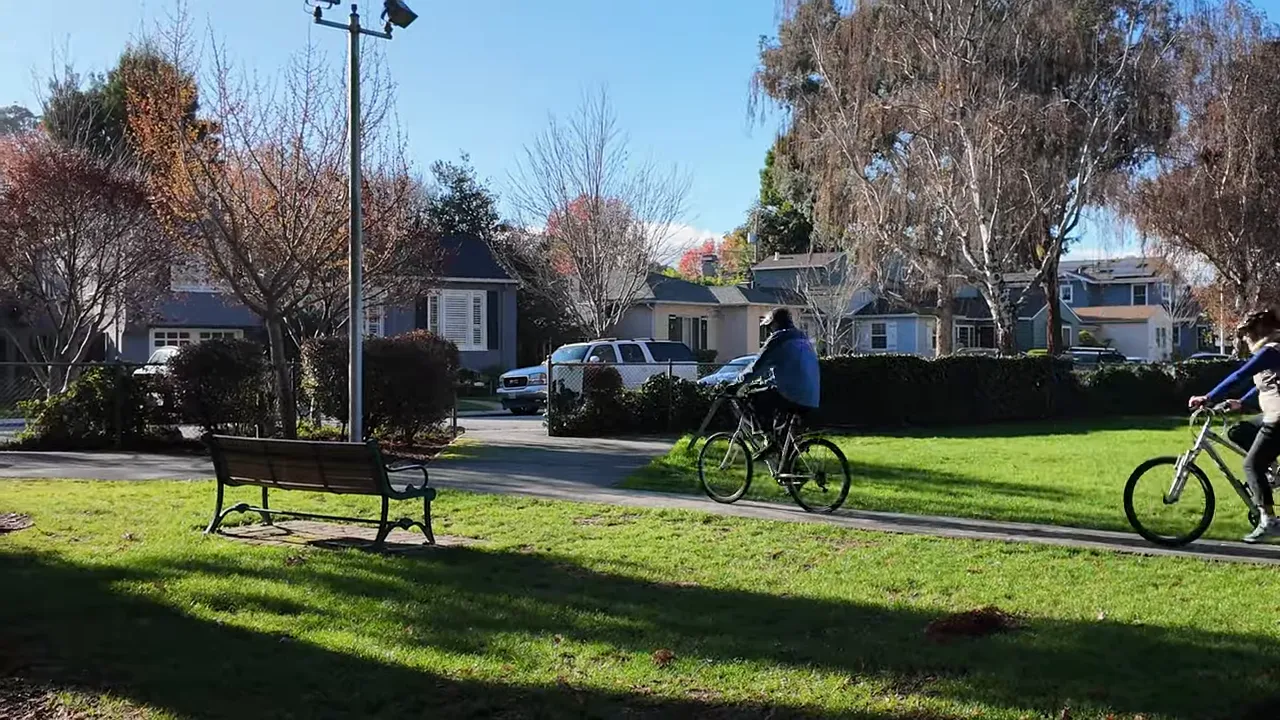
A personal example included: the writer grew up in Burlingame and loves riding a bike everywhere. That kind of lifestyle is possible across both areas because the region has great routes and a lot of nearby green space.
The Bay Trail biking from Burlingame to farther south
You can hop on your bike or take a walk from Burlingame, heading south through areas like Redwood Shores, and even continue down toward the Dumbarton Bridge before going further if you want to keep going.
Favorite parks across San Mateo County
Some parks mentioned as highlights include:
- Edgewood Park in Woodside
- Coyote Point Park in San Mateo
- Dillon or Seal Point Park areas in San Mateo County (mentioned as part of the list)
- Washington Park in Burlingame
- Bayfront and Central Park areas, including Central Park near the Japanese Tea Garden in San Mateo
For the more southern areas, you get additional strong park options in Los Altos Hills and Palo Alto, including:
- Magic Mountain near Skyline
- Purisima open space
- Castlemont area and hiking and mountain biking routes mentioned around redwoods and open space
There is also a mention of the Kings Mountain Art Festival off Skyline Boulevard in Woodside, which highlights the kind of seasonal community event you can find in these neighborhoods.
Schools Compared
Both sides offer excellent education options. Families are drawn to specific towns, but the region overall is strong.
Most kids typically attend public schools, though there are private options that some families pursue depending on preference.
Private school options mentioned
- Harker School in San Jose
- Castilleja School and Menlo School type options in the peninsula area (as named)
- Wilder School of the peninsula
- Silicon Valley International School
- German American School (Palo Alto)
- The Kehillah School type option mentioned as part of the private list
- Wilder School related to technology policies for students
Why Palo Alto and the Stanford area feels academic
One theme was that South Bay cities like Palo Alto and Cupertino are strongly tied to an “academic feel” many families seek, largely because of Stanford’s influence in the region. One example included an international family who wanted to buy near Palo Alto so their child could potentially “live at Stanford” one day.
We do not need to take that literally to understand the appeal. In the real world, these areas are among the most sought after, and the schools are a big reason.
Highly ranked public schools in both regions
Schools mentioned as standout public options include:
- Gunn High School
- Palo Alto High School
- Aragon and other consistently top ranked schools mentioned across towns like Menlo Park and San Carlos
In San Mateo County, areas with higher ranked public schools were described as including:
- Burlingame
- San Mateo
- Menlo Park
- San Carlos
- Belmont
- Redwood Shores
- Foster City
The overall message is consistent: you can find strong public school options throughout San Mateo County, even if certain towns have more concentrated top rankings.
School takeaway
If schools are your priority, do not choose solely by “peninsula vs South Bay.” Choose based on town fit and specific school attendance areas. The region is strong enough that the details matter more than the label.

What You’ll Pay on the Peninsula vs South Bay
This is where expectations need to be grounded. Everything around Silicon Valley is expensive, but the ranges still help.
Below are the price ranges shared for key areas. Use them as directional context when planning your search.
South Bay median prices around 1.8 million for certain communities
For communities like Sunnyvale and Mountain View, the median home price was described as a little under 2 million, around 1.8 million.
Menlo Park and Palo Alto start higher 3 to 5 million plus
If you want the more upscale peninsula towns like Menlo Park and Palo Alto, you are often starting around 3 to 5 million.
Tree lined streets and longtime desirability also come with a price tag. Palo Alto can be significantly more expensive, sometimes described as being 50 to 100 percent more than nearby Burlingame based on lot value.
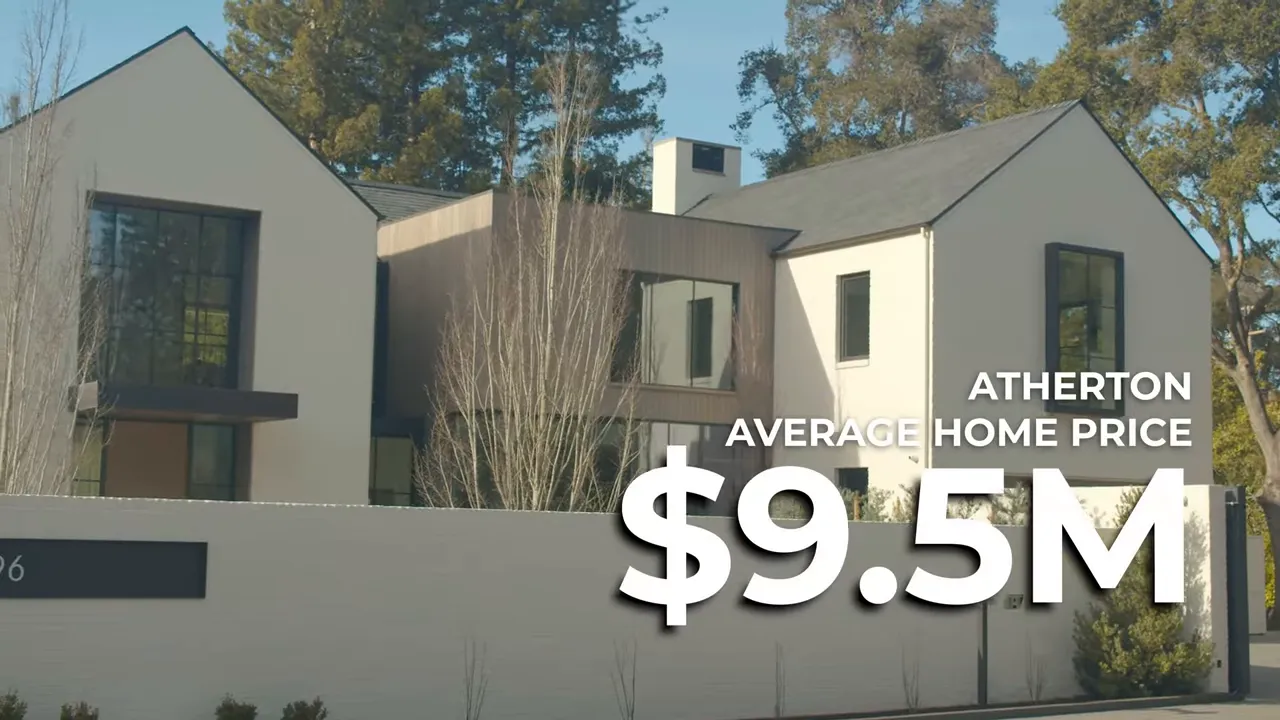
Atherton the top priced ZIP average around 9.5 million
Beyond that, Atherton was described as the most expensive ZIP code, with an average price of around 9.5 million. It is an extreme example, but it shows how wide the spectrum is in the area.
In areas like Daly City and South San Francisco and parts of San Bruno, prices were described from the low million range up into mid to high 1 millions, with an average around 1.2 to 1.5 million. Fog and weather were mentioned as part of how location feels and potentially how pricing shows up.
Move south within San Mateo County and prices rise
When moving to places like Millbrae and Burlingame, average and median prices were described as in the high 2 million range.
San Mateo itself was described as having a wide spread because it includes many different neighborhoods. The point was that San Mateo is harder to generalize because you might find homes at around 1 million or much higher depending on the area.
San Carlos and Redwood City bridge the gap
San Carlos was described as comparable to Burlingame but about 10 to 15 percent lower on average because it is a bit farther from San Francisco while still being close to the valley.
Redwood City was described as starting around the high 1 million range and rising to around 4 million depending on location pockets.
Hills vs Flat Living: What Your Money Actually Gets You
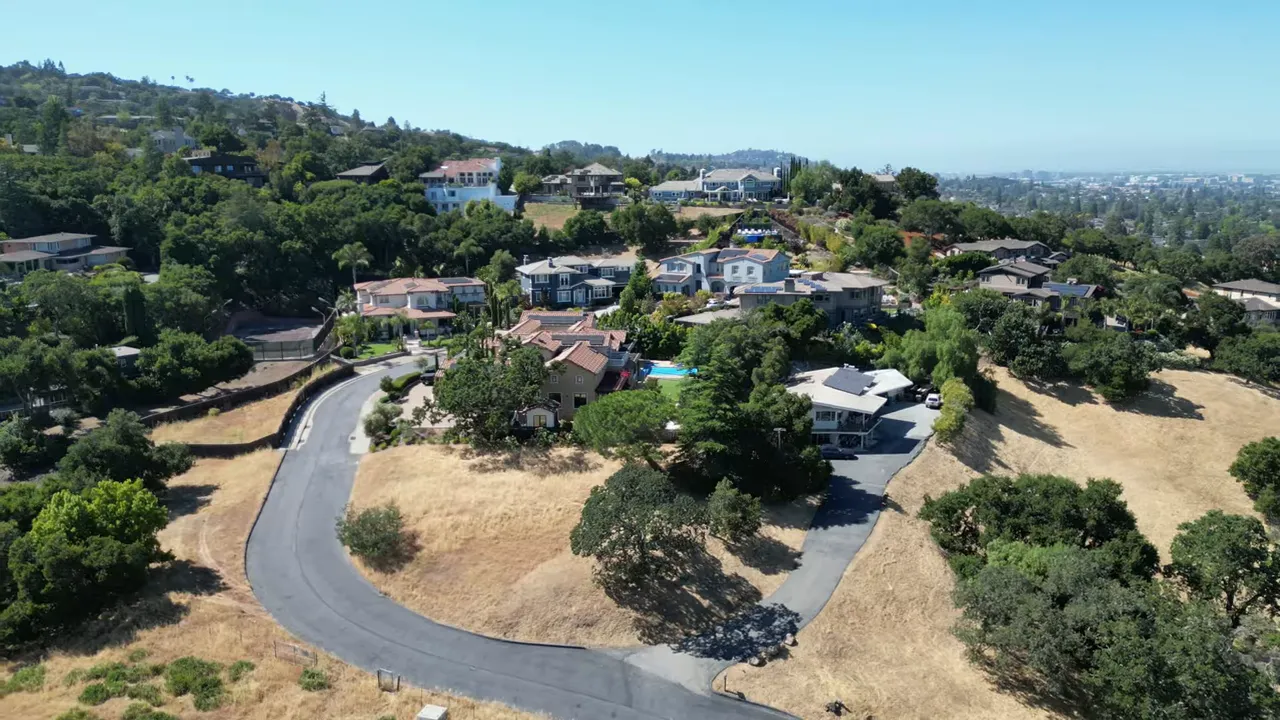
One of the most practical insights shared is that you can often find a better value by choosing whether you want hillside living or flatter, more walkable areas.
In South Bay towns, the 280 freeway and the region’s western geography were used as a reference for hillside versus flatter areas. The more you move toward hills, the more views and greenery come along, and typically the lower the price per square foot.
Why hills can be cheaper per square foot
Flatter areas tend to cost more because more people want them for walkability, demand, and convenience. Hills sometimes act as a price discount while still giving you the things many buyers want: privacy and greenery.
Examples given included discussions about lot sizes, where flatter walkable areas may have larger flat lots, while hillside areas tend to offer more discount per square foot.
Two lifestyle preferences walkability vs privacy
People who buy in flat areas often emphasize:
- walkability
- knowing neighbors
- kids going to play outside more easily
- the ability to feel connected without long car trips
People who choose hillside areas often emphasize:
- privacy
- views and greenery
- more house for the same price
- space and quiet
At the end of the day, “peninsula vs South Bay” is a helpful starting point, but “flatter vs hills” can be just as important for daily satisfaction.
Peninsula or South Bay: Which One Is the Better Fit for You?
If we boil down the decision into the simplest truth from our perspective:
Choose based on your work first. Jobs and commute patterns dictate everything else, including where you will realistically want to spend weekdays and how much you will enjoy the area after a long day.
Then consider:
- Weather if you want milder days or you can handle warmer temperatures
- Commute mechanics whether BART or Caltrain fits your schedule or you will rely on driving
- Schools if you are thinking about family life and long-term enrollment
- Nature and lifestyle because both areas offer parks and outdoor options
- Hills vs flatter living for pricing per square foot and daily feel
In other words, the “best” place is not universal. It is the place that makes your weekday easier, your weekend better, and your long-term routine sustainable.
If you’d like help figuring out the best fit for your commute, budget, and lifestyle, I’d love to talk. Call or text 650-822-7088 to get started.
FAQ: Peninsula vs South Bay Living
What is the difference between San Mateo County peninsula and the South Bay
The peninsula is generally the stretch of towns from South San Francisco down toward areas like Redwood City. South Bay refers to the more southern part of the Bay that includes cities like Palo Alto, Mountain View, and Los Altos Hills, and typically extends toward the San Jose area. There is no perfectly official boundary, but the lifestyle and commute patterns differ enough to matter.
Should we choose peninsula or South Bay based on commute time
Yes. Commute patterns are the biggest practical driver. If you go into the office more frequently, living in a way that keeps drives to a reasonable range is key. When both jobs are in the same big employment corridor, people tend to cluster where the commute is simpler.
Is South Bay always cheaper than the peninsula
No. Both regions contain expensive neighborhoods and high price pockets. Town by town variation matters more than assuming one side is always cheaper.
Does it get much warmer in the South Bay
In general, yes. The more south you go, the warmer it tends to be. The region is mild year round, but you can still see meaningful temperature differences between northern peninsula areas and deeper South Bay communities.
Is healthcare access better in one area
Not significantly. The peninsula is closer to UCSF, while the South Bay is closer to Stanford. But major healthcare systems like Kaiser, Sutter Health, and Palo Alto Medical Foundation have presence across both areas, so access is strong throughout.
Are schools good in both areas
Yes. There are excellent public and private options across San Mateo County and in South Bay towns. Families should still focus on specific towns and school attendance areas rather than relying on the broader label alone.
Read More: Best Places to Live in San Mateo County: Same Budget, Different Lifestyle