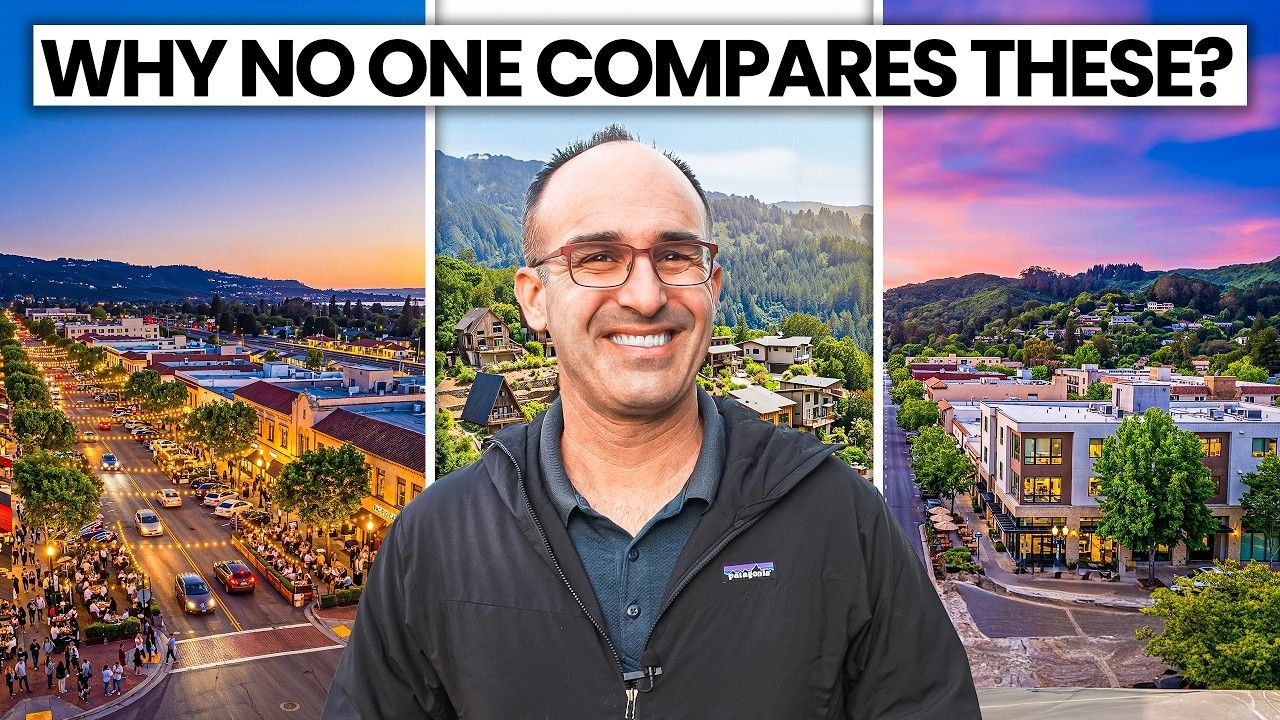

If you are moving to Burlingame, you have probably heard the classic rule: west of El Camino is better. Bigger lots, better homes, more walkability, more desirable. I understand where that idea comes from, but it is way too simple.
After reviewing 235 Burlingame single-family home sales from the last 12 months and cross-referencing them against all 6,168 residential lots in the city, the data tells a more interesting story. East vs west of El Camino is not really a contest between good and bad. It is a decision between different lifestyles, home sizes, lot sizes, floor plans, privacy, and access to the parts of Burlingame that matter most to you.
For anyone moving to Burlingame, the better question is not, “Which side is better?” It is, “What kind of day-to-day life do I want?”
Moving to Burlingame: East vs. West of El Camino Explained
El Camino Real runs north to south through Burlingame, but it is not a meaningful dividing line in the way people often make it out to be. Both sides have flat, walkable streets, character homes, great neighborhoods, and strong buyer demand.
When comparing only the flat neighborhoods, homes east of El Camino sold for $1,548 per square foot, while homes west of El Camino sold for $1,612 per square foot. That is a difference of just $64 per square foot.
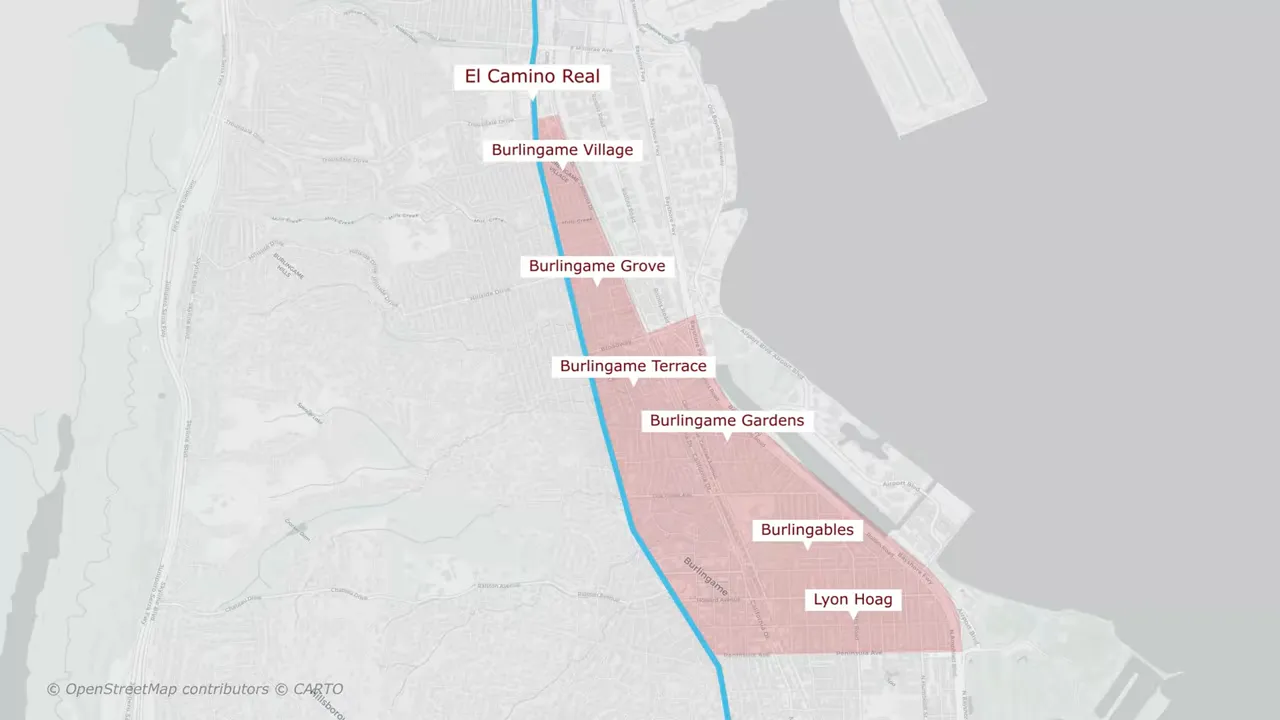
The median sale price tells a different story: about $2.5 million east of El Camino compared with $3.7 million west of El Camino. But that does not mean east-side homes are discounted from a desirability standpoint. The typical home east of El Camino is around 700 square feet smaller. Buyers are generally paying less in total because they are buying less house and, often, less land.
That distinction matters. Price per square foot is the great equalizer here. It suggests the market values both sides much more similarly than the old east vs west of El Camino narrative would suggest.
Moving to Burlingame is therefore not about automatically stretching for the west side. Smaller homes on smaller lots can be exactly the right fit for buyers who want location, walkability, charm, manageable outdoor space, and a lower overall entry point.
Moving to Burlingame: Which Side Offers More Space?
Now, if land is the priority, the west side does have a real advantage. In Easton Addition, Burlingame Park, and Ray Park, 76% of lots are 6,000 square feet or larger. East of El Camino, only 37% of lots reach that size.
So yes, more land is available west of El Camino. But the sales data says many buyers do not consider that extra land worth changing their lifestyle or budget for. The premium is modest when comparing flat neighborhoods.
The hillier west-side areas create a different value proposition entirely. Mills Estates averaged $1,324 per square foot, while Burlingame Hills averaged $1,204 per square foot. Those are well below the flat neighborhoods on either side of El Camino.
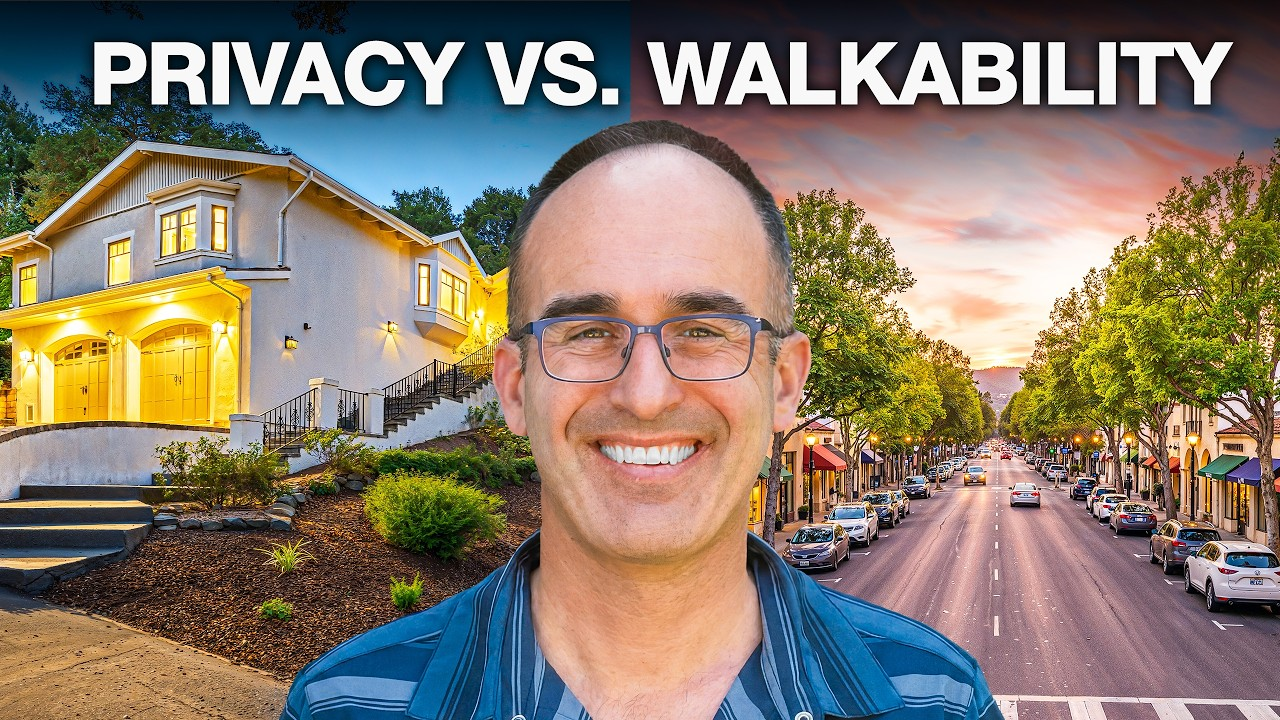
That does not make the hills less desirable. It simply reflects the tradeoff. You can get larger lots, privacy, views, and more interior square footage, but you are giving up daily walkability. For the right buyer, that trade is absolutely worth it.
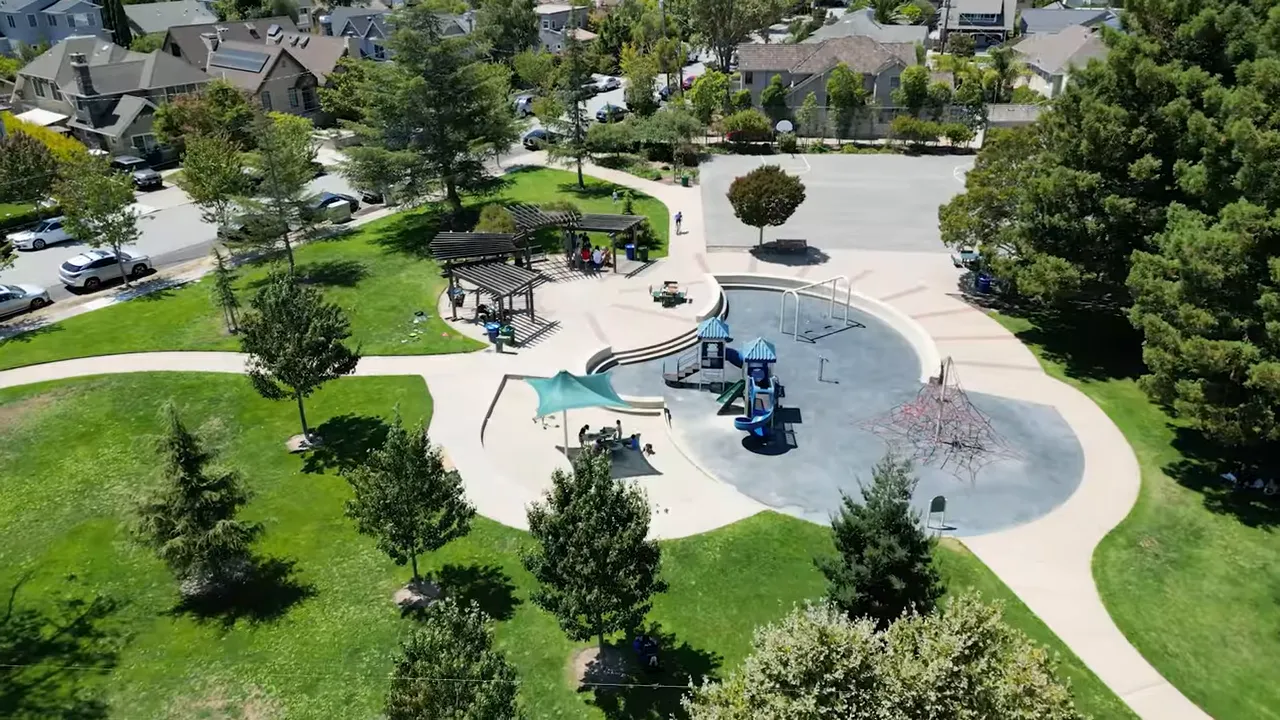
Ray Park is a perfect reminder that lot size alone does not determine demand. Nearly half of Ray Park lots are under 6,000 square feet, roughly in the same range as Lyon Hoag and Burlingame Terrace east of El Camino. Yet Ray Park achieved the highest price per square foot in Burlingame at $1,752. Buyers are paying for the neighborhood, ranch-style layouts, attractive streets, Ray Park itself, and proximity to Lincoln Elementary School.
Moving to Burlingame: Living East of El Camino
The east side has more range than many people realize. There are smaller homes and more accessible entry points, but there are also highly competitive neighborhoods with excellent walkability and strong price-per-square-foot performance.
Lyon Hoag
Lyon Hoag sits east of El Camino and east of California Drive, south of Burlingame Gables and within walking distance of downtown Burlingame. It is frequently treated as an entry point, but the data does not support the idea that it is a lesser neighborhood.
Over the last year, Lyon Hoag averaged $1,638 per square foot, higher than Easton Addition’s $1,556. Its median sale price was around $3 million, and homes had a median market time of eight days. That is serious demand.
Burlingame Terrace
If walkability is your thing, Burlingame Terrace is probably the strongest option in the city. It sits between Broadway to the north and Burlingame Avenue to the south, between El Camino and California Drive. You can walk to both commercial districts.
Homes are typically 1,200 to 2,200 square feet, with a mix of charming older homes and newer construction. McKinley Elementary anchors the neighborhood and offers Burlingame public schools’ Spanish immersion program, which uses a lottery for admission. The median sale price was $2.5 million, and the average price per square foot was $1,512.
Burlingame Gables
Burlingame Gables is one of the city’s most tree-filled neighborhoods, which is saying something in a city with more than 18,000 trees. It is near Washington Park, Burlingame High School, the Peninsula Tennis Club, and the community center.
Most homes range from roughly 1,000 to 2,000 square feet, typically with two or three bedrooms. Attached garages are common, which can make an ADU more practical than in neighborhoods where detached garages sit at the back of the lot. The median sale price was $2.9 million, while price per square foot came in at $1,641.
Burlingame Grove And Burlingame Village
Burlingame Grove, sometimes labeled Burlingame Gate on maps, sits east of El Camino, north of Broadway, and west of California Drive. Homes are often 1,100 to 1,800 square feet with two or three bedrooms. There has been a noticeable amount of newer construction on streets including Cappuccino, Paloma, and Mills. Cambridge and Oxford are especially beautiful tree-lined streets. Broadway and the Millbrae BART and Caltrain station are convenient from here. Price per square foot was $1,547.
Burlingame Village is the northeasternmost neighborhood in the city. It offers Village Park, a soccer field, playground, basketball court, preschool, and several of Burlingame’s rare cul-de-sacs. Ranch-style homes create a distinct feel, and demand is strong. Its average price per square foot was $1,681.
Burlingame Gardens
Burlingame Gardens is the most affordable neighborhood in Burlingame, located west of Highway 101 and near the train tracks. Homes are generally 1,100 to 1,600 square feet with two or three bedrooms.
It is close to Burlingame High School, the aquatic center, Broadway, and Washington Park. The median sale price was about $2.3 million, though the most expensive sale in the neighborhood exceeded $4 million. Smaller homes and the freeway-adjacent location explain much of the lower median, not a lack of demand for the neighborhood.
Moving to Burlingame: Living West of El Camino
Mills Estates
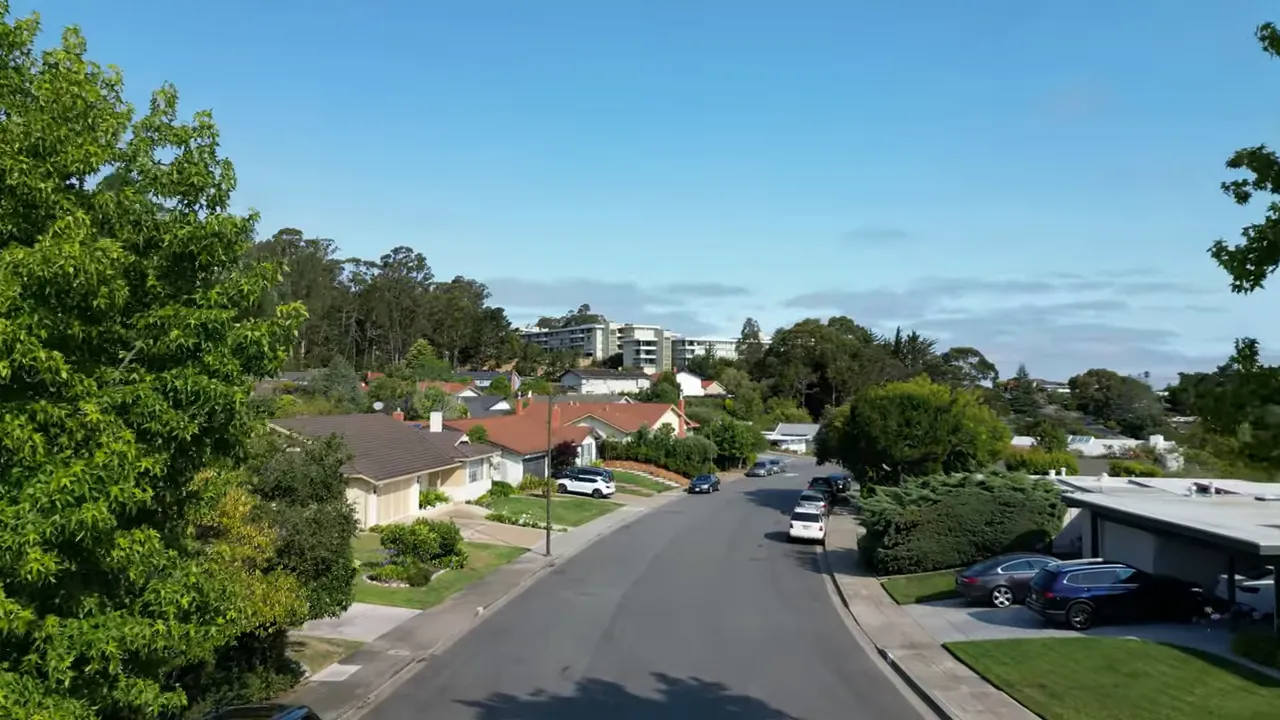
Mills Estates is known for larger 7,000 to 10,000 square foot lots, one-level ranch homes, attached two-car garages, bay views, and some very cool Eichler homes. For buyers moving to Burlingame who want substantial square footage in a three-bedroom home, this is often one of the best places to look.
It is close to Highway 280, which works well for commuting north toward San Francisco or south toward Cupertino and Mountain View. The tradeoff is the hill. Day-to-day errands generally require driving down to Burlingame Plaza or elsewhere. The median price was $3.2 million, and the price per square foot was $1,324.
Burlingame Hills
Burlingame Hills is the city’s most private neighborhood. It has the largest average lot size in Burlingame, heavily wooded streets, views toward San Francisco, and Mills Canyon’s roughly one and a half miles of hiking trails.
Some lots reach an acre or more, although the terrain is not always fully usable. Sidewalks are limited, and this is not a neighborhood chosen for convenience on foot. It is chosen for privacy, trees, views, and space. The median sale price was $3.3 million, the top sale was $5.6 million, and price per square foot was $1,204.
Burlingame Park And Easton Addition
Burlingame Park is arguably the crown jewel if you want large lots, historic homes, and proximity to Burlingame Avenue. It has the third-largest average lot size in the city after Mills Estates and Burlingame Hills, but it still offers the flat, connected lifestyle that many buyers want.
The neighborhood’s median sale price was $3.9 million and its price per square foot was $1,641. Recent sales show the range: one Pepper Avenue property sold for $17 million, while another original-condition property on more than a flat half-acre sold for around $9 million. There are also opportunities below $4 million on smaller, less typical lots.
Easton Addition belongs in this same conversation. It has larger homes, architectural character, history, and broad buyer appeal. But moving to Burlingame should not mean assuming Easton Addition or Burlingame Park is automatically the right fit. The right neighborhood depends on whether the extra house and land improve your actual lifestyle.
Moving to Burlingame: How to Choose Between East and West
The practical way to approach moving to Burlingame is to put priorities in order. Do not let a broad east vs west of El Camino label choose the neighborhood for you.
- Prioritize walkability: Consider Burlingame Terrace, Lyon Hoag, Burlingame Gables, Burlingame Park, or Easton Addition.
- Prioritize a more manageable purchase price: Look closely at Burlingame Gardens, Burlingame Grove, Burlingame Terrace, and smaller homes in Lyon Hoag.
- Prioritize ranch layouts: Ray Park, Burlingame Village, and Mills Estates deserve attention.
- Prioritize privacy and larger lots: Burlingame Hills and Mills Estates can offer more space for the money per square foot.
- Prioritize downtown access with larger lots: Burlingame Park is hard to beat.
- Prioritize an ADU-friendly lot configuration: Burlingame Gables can be compelling because attached garages are more common.
There is a little bit of everything here. Buyers value ranch homes in Ray Park and Burlingame Village. Others want the larger, older homes of Easton Addition and Burlingame Park. Some want the hills, views, and quiet of Burlingame Hills. All of those preferences create real demand.
The takeaway is simple: moving to Burlingame is not about finding the “right” side of El Camino. It is about finding the neighborhood that makes sense for your budget, commute, desired floor plan, lot needs, and the lifestyle you want every day.
Planning on moving to Burlingame? Whether you're deciding between the east or west side of El Camino, comparing neighborhoods, or relocating from out of the area, we're here to help you find the right fit for your lifestyle and budget. Schedule a consultation to discuss your relocation plans, or email hello@burlingameproperties.com to get personalized guidance and local insights before you make your move.
FAQs About Moving to Burlingame
Is west of El Camino always more expensive in Burlingame?
West-side homes often have higher total sale prices because they are generally larger and sit on larger lots. However, flat neighborhoods east and west of El Camino were very close in price per square foot: $1,548 east versus $1,612 west.
Which side is better for walkability when moving to Burlingame?
Burlingame Terrace is described as the city’s most walkable neighborhood because it sits between Broadway and Burlingame Avenue. Lyon Hoag, Burlingame Gables, Burlingame Park, and Easton Addition also offer strong access to parks, schools, downtown, and commercial areas.
Where can I get the best value per square foot in Burlingame?
Burlingame Hills and Mills Estates had the lowest price per square foot among the neighborhoods discussed, at $1,204 and $1,324 respectively. The tradeoff is a hillier, less walkable environment.
What is the most affordable neighborhood for moving to Burlingame?
Burlingame Gardens had the lowest median sale price at about $2.3 million. Homes tend to be smaller, and the neighborhood is closer to Highway 101, but it remains convenient to Broadway, Washington Park, Burlingame High School, and the aquatic center.
Why is Ray Park so expensive despite some smaller lots?
Ray Park posted the highest price per square foot at $1,752. Demand reflects more than lot size: buyers value the neighborhood itself, attractive streets, ranch-style floor plans, Ray Park, and proximity to Lincoln Elementary School.
Read More: Baywood, San Mateo: The Neighborhood Burlingame Buyers Should Consider First